
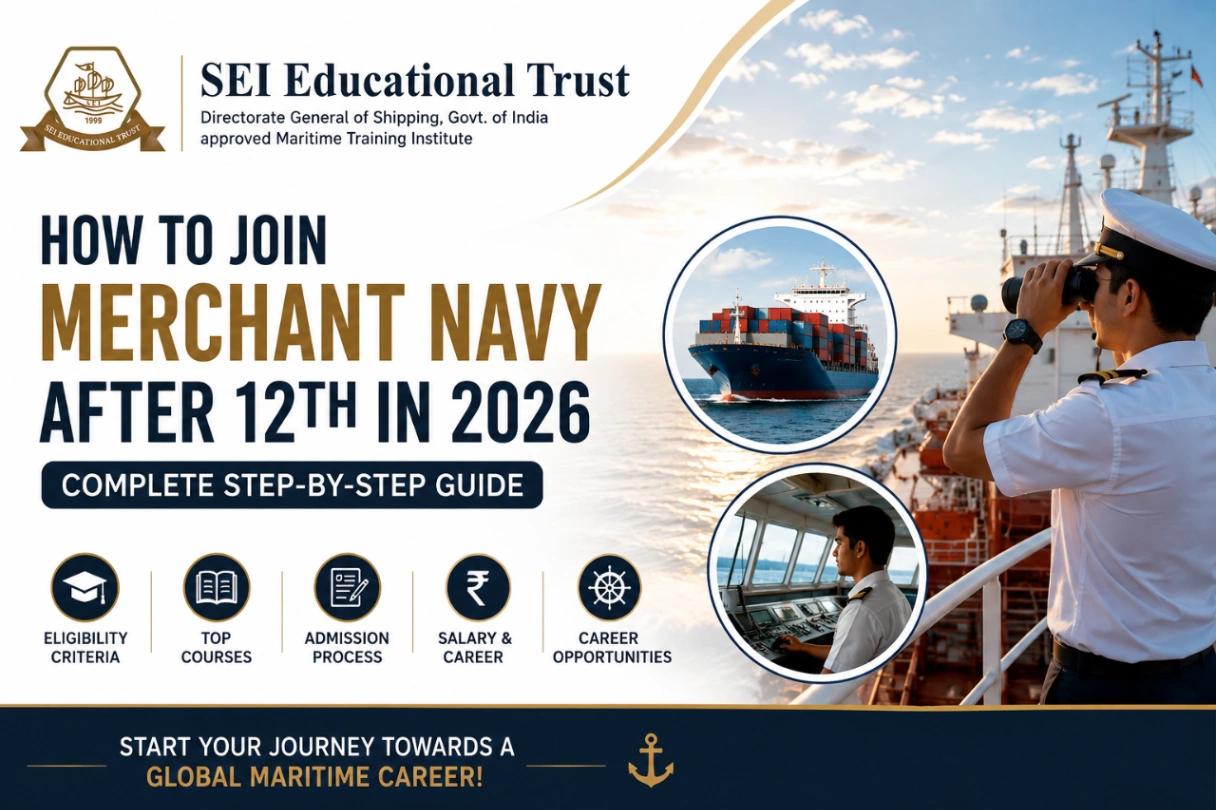
How to Join Merchant Navy After 12th in 2026: Complete Step-by-Step Guide
The Merchant Navy offers one of the most exciting and rewarding career paths for students who dream of working at sea, traveling the world, and earning competitive salaries. Every year, thousands of students search for ways to join the Merchant Navy after completing their 12th standard.
If you are wondering how to start your maritime career, this guide explains everything you need to know—from eligibility and courses to salary and career growth opportunities.
What is the Merchant Navy?
The Merchant Navy is the commercial shipping industry responsible for transporting cargo, oil, gas, vehicles, and passengers across international waters. Unlike the Indian Navy, which is a defence force, the Merchant Navy focuses on trade and transportation.
Merchant Navy professionals work aboard various types of vessels, including:
-Container Ships
-Oil Tankers
-Gas Carriers
-Bulk Carriers
-Passenger Ships
-Offshore Support Vessels
Can You Join Merchant Navy After 12th?
Yes, students can join the Merchant Navy after completing Class 12.
The opportunities available depend on the stream chosen in school.
For PCM Students
Students with Physics, Chemistry, and Mathematics can pursue officer-level career paths such as:
- -B.Sc. Nautical Science
- -B.E. Marine Engineering (4-year degree course)
- -DNS (Diploma in Nautical Science)
For Non-PCM Students
Some maritime training programs and support-level courses may be available depending on eligibility requirements and current regulations.
Students should always verify the latest eligibility criteria before applying.
Eligibility Criteria for Merchant Navy After 12th
Educational Qualification
- Passed 12th standard from a recognized board
- Physics, Chemistry, Mathematics, and English for officer-entry courses
- Minimum marks may vary by course
Age Limit
Age requirements differ according to the course and company recruitment policies.
Medical Fitness
Candidates must be medically fit according to maritime standards.
Important factors include:
- -Good eyesight
- -Colour vision standards
- -Physical fitness
- -Hearing standards
Best Courses to Join Merchant Navy After 12th
1. Diploma in Nautical Science (DNS)
DNS is one of the most popular pathways for students aiming to become deck officers.
Career Path
Deck Cadet → Third Officer → Second Officer → Chief Officer → Master (Captain)
2. B.Sc. Nautical Science
This program provides academic and practical maritime training for students pursuing deck officer careers.
Career Path
Deck Cadet → Third Officer → Second Officer → Chief Officer → Master (Captain)
3. Marine Engineering
Ideal for students interested in ship machinery and technical operations.
Career Path
Engine Cadet → Fourth Engineer → Third Engineer → Second Engineer → Chief Engineer
Merchant Navy Admission Process
Step 1: Research the Right Course
Choose a course based on your academic background and career goals.
Step 2: Check Eligibility
Review educational, medical, and age requirements carefully.
Step 3: Apply to a Reputed Maritime Training Institute
(Directorate General of Shipping Approved – can be verified on the Directorate General of Shipping website)
Select an institute that provides quality maritime education and student support.
Step 4: Complete Documentation
Prepare:
- -Educational Certificates
- -Identity Proof
- -Passport
- -Passport-size Photographs
- -Other required documents
Step 5: Medical Examination
Undergo medical fitness evaluation as required for maritime careers.
Step 6: Begin Training
After admission and documentation, students start their maritime training journey.
Merchant Navy Salary After 12th
One of the major attractions of a maritime career is the earning potential.
Approximate salary ranges vary depending on rank, vessel type, employer, and experience.
Entry-Level
- -Deck Cadet
- -Trainee Marine Engineer
Mid-Level Officers
- -Third Officer
- -Second Officer
- -Fourth Engineer
- -Third Engineer
Senior Officers
- -Chief Officer
- -Second Engineer
- -Chief Engineer
- -Master (Captain)
As experience increases, salaries and responsibilities grow significantly.
Benefits of a Merchant Navy Career
Travel the World
Seafarers get opportunities to visit multiple countries and ports.
Attractive Salary
Maritime careers are known for competitive compensation packages.
Career Growth
Structured promotion pathways allow professionals to advance steadily.
International Exposure
Working with multinational crews develops technical and interpersonal skills.
Challenges of Merchant Navy Life
While rewarding, the profession also comes with challenges:
- -Long periods away from home
- -Demanding work schedules
- -Weather conditions at sea
- -Operational responsibilities
Students should understand both the advantages and responsibilities before choosing this career.
Why Choose SEI Educational Trust?
At SEI Educational Trust, aspiring maritime professionals receive guidance regarding maritime education, career pathways, admissions, and industry requirements.
Students can explore available training programs and receive support throughout their maritime journey.
Frequently Asked Questions
Is Merchant Navy a good career after 12th?
Yes. It offers global exposure, career growth opportunities, and competitive salaries for eligible candidates.
Can girls join the Merchant Navy?
Yes. Women have increasing opportunities across various maritime roles.
Do I need PCM for Merchant Navy?
PCM is generally required for many officer-entry pathways.
Is medical fitness important?
Yes. Medical fitness is a key requirement for maritime careers.
Can I become a Captain after 12th?
Students begin as trainees and progress through officer ranks based on training, examinations, and sea service.
Conclusion
The Merchant Navy continues to be an attractive career choice for students seeking adventure, international exposure, and long-term professional growth. By choosing the right course, meeting eligibility requirements, and receiving proper training, students can build a successful maritime career.
If you are planning to start your journey after Class 12, explore your options early, understand the requirements, and take the first step toward a rewarding future at sea.